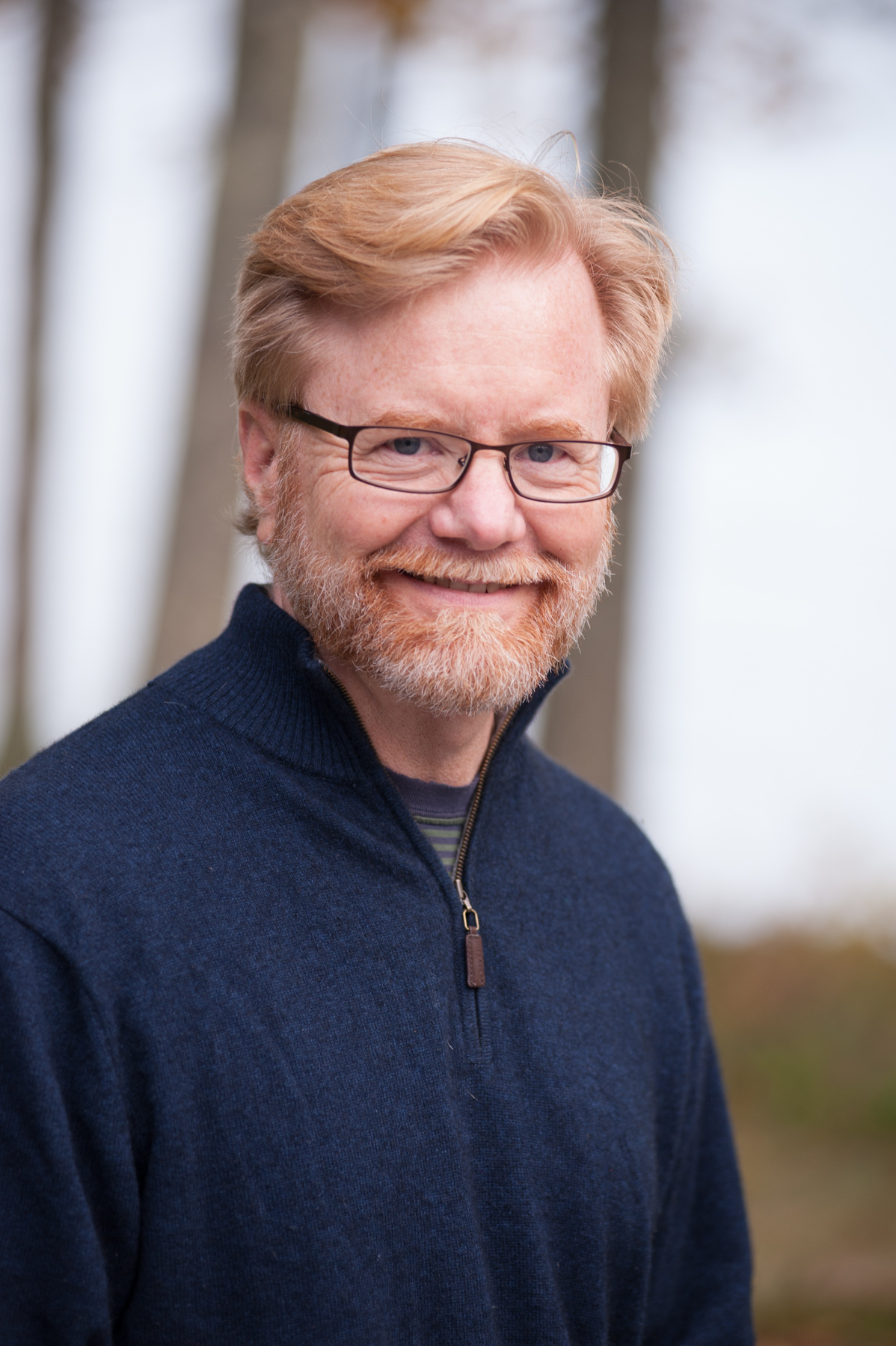
- Board-Certified Psychiatrist
- BS, Chemistry, University of Denver, Denver, CO
- MD, University of Texas, Houston, TX
- Psychiatric Residency, University of Texas, Houston, TX
- Medical Staff in Psychiatry Department at Mid Coast Hospital in Brunswick, ME since 1990
- Private Practice Office: Brunswick, Maine, (617) 398-7891; Affiliate with IHCM, Integrative Health Center of Maine, Cumberland, Maine
- Medical Director of Transcranial Magnetic Stimulation (TMS) treatment with NeuroHealthMaine in Cumberland, Maine (207) 233-8804 (no longer open)
I was initially excited with the powerful tools I learned in my psychiatric training for helping people to advance their developmental potential. This excitement waned over the years as I saw how often psychopharmacology and conventional psychotherapy fell short of their promise in chronic disorders. This led to my collaboration with complementary health practitioners and eventually to an exploration of ways to intervene directly myself with nutrition, lifestyle, energetic healing techniques, and Functional Medicine.
In working with patients over the years, I have come to believe that love in its many forms and/or coping with the absence of love, constitutes the fulcrum upon which suffering and healing turn. I believe that love in the form of listening with full presence, whether as a friend or family member or healing practitioner, also includes listening to the body as a teacher.
In addition to directing TMS treatment in Cumberland, (now closed), and my private practice in Brunswick, Maine for over 36 years, I have managed treatment units in private and public psychiatric hospitals, consulted in therapeutic high schools and residential treatment centers, and served in community mental health centers.
More Background
The field of psychiatry was full of hope and excitement when I trained in medicine and psychiatry in the 1980’s. The Bio-Psycho-Social Model of Illness promised an evolution to a more holistic understanding and treatment of illness. Medications appeared to offer much relief for severe conditions, especially in allowing for shorter hospital stays. Research appeared to be on the march forward to finding more and better medications that promised to correct “chemical imbalances” in the brain. Psychotherapy offered the hope of broader and deeper emotional healing. The hope of the field flowed from the seductively simple infectious disease model from decades ago (one bacteria causes one disease with one anti-biotic to cure it), that one cause for one disorder with one drug to cure the disorder could be found for each disorder in the diagnostic manual of psychiatry (DSM). The DSM was and still is a hopeful document with the hope that identifying clusters of symptoms that recur in patients will allow simple drug interventions to remedy the symptoms. While medication appears to work out long term for some, this hope has not bared out for many. Individual genes or imbalances that cause diagnoses have not been identified. Only more complexity has been found. To no one’s surprise, the brain turns out to be much more complex than this simple model. Infectious diseases turn out to be more complex than this simple model as well. The brain does not “want” medications to correct specific neurotransmitter imbalances. The brain responds to these psychiatric medications over time by attempting to negate their effect as though the medications were throwing the brain out of balance…even if the medication happens to be offering some symptom relief in the moment. This negation of medication effect is understood to be “down regulation of neurotransmitter receptors” and leads to medication benefits decreasing or wearing off altogether over time and to the experience of withdrawal effects upon discontinuation.
Through the 1990’s I saw all too often that medication treatment fell short of its promise. Family doctors and gastroenterologists told patients, “we have worked up your IBS (Irritable Bowel Syndrome) thoroughly and there is no physiologic problem with your gut. Therefore, it must be all-in-your-head. Go see a psychiatrist,” and referred them to me. But when we got their emotional issues dealt with, their digestive symptoms were still present. These challenges eventually led me to the Functional Medicine model. This model is a science-based holistic approach to chronic symptoms that is taught to practitioners nationwide by the Institute for Functional Medicine. This model reminds us that we do know enough about human biochemistry, physiology and microbiology to make at least some educated guesses about how symptoms developed and evolved in a complex individual human to the point that they tip over into a chronic illness or “diagnosis”. These guesses, frequently along with a variety of medical tests through conventional and specialty laboratories, give us a much better chance of getting to the “upstream” causes of symptoms and developing a treatment strategy with more depth. Such a treatment strategy typically includes nutritional, lifestyle, emotional healing, and community building aspects in addition to physiologic supports. If medication is part of the physiologic support, where it can be helpful or even life saving, we work to make it as short term as possible. Collaborating with other practitioners of the healing arts is frequently important or even critical to clinical progress as no one approach has all the answers in many cases of complex chronic disorders including: conventional and functional medicine, osteopathy, homeopathy, naturopathy, acupuncture and Chinese medicine, yoga and meditation, energy medicine of many varieties, bodywork, consciousness-based medicine, health kinesiology, life and health coaching, clinical nutrition, Integrative Manual Therapy (IMT) by physical therapists, many psychotherapy and trauma release approaches, Ayurveda, biological dentistry, and others.
In addition to medication and natural bio-chemical supports, diet and lifestyle review, psychodynamic and interpersonal psychotherapy, trauma release procedures, psycho-education, building community, the Internal Family Systems (IFS) Model of psychotherapy and collaboration with other practitioners as above are the mainstays of my practice. (Note: As I slowly move toward retirement, I no longer take people on to manage medication).
 Miles Simmons, MD